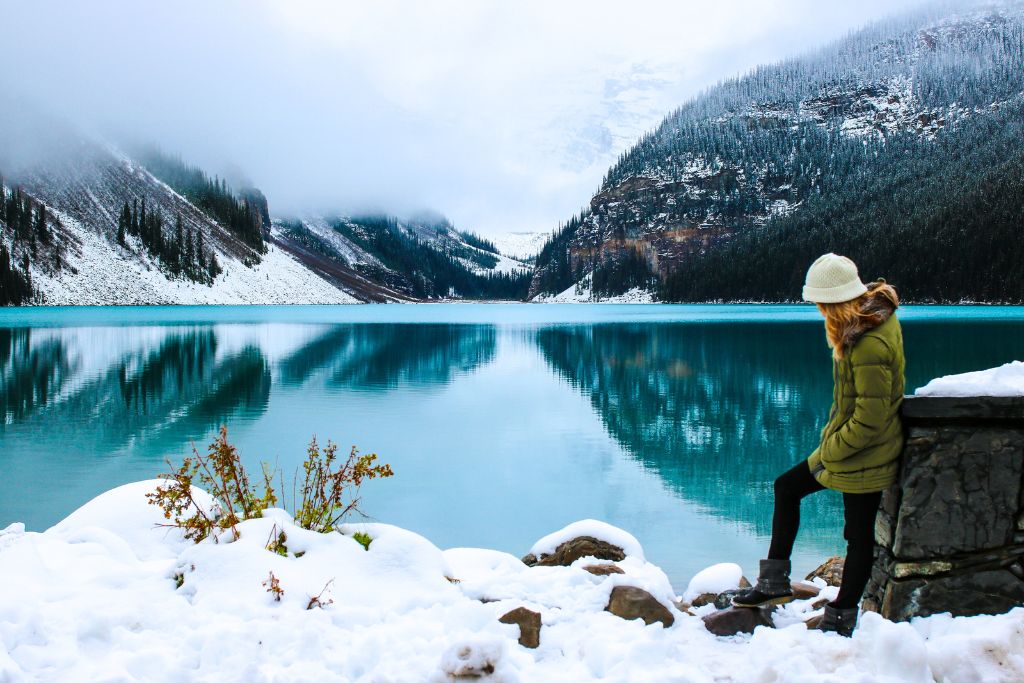
35 Fun Facts About Canada That May Surprise You
Want to learn more about Canada? Here are 35 fun facts about Canada that you probably didn’t know
Canada is a fascinating place thanks to its varied landscapes, diverse cultures and unique history. But there are also some unusual and surprising facts about Canada and the way of life here.
I’ve been fortunate enough to experience this first-hand, having lived in Canada since 2018. When I first moved here, I knew a little bit about what to expect, but there was also a lot that amazed me (mostly in a good way!). Since then, I’ve discovered a lot about Canada, and I’m always learning more as I continue exploring this beautiful country.
And, to share this with you, I’ve put together all my favourite fun facts about Canada. So, read on to find out some of the most weird and wonderful things about Canada that may surprise you!
Chasing Chanelle contains affiliate links and is a member of the Amazon Services LLC Associates Program. If you make a purchase using one of these links, we may receive compensation at no extra cost to you. We only recommend products and services we use and trust. Read our disclaimer for more information.
35 Fun Facts About Canada
1. Canada is the Same Size as Europe
Canada is the second-largest country in the world, only surpassed by Russia in terms of land area. Spanning approximately 9.985 million km² (3.855 million sq mi), Canada is so big that it’s almost the same size as the whole of Europe. You could actually fit the UK into Canada over 40 times!
2. Canadians Eat the Most Doughnuts in the World
Thanks to pop culture and shows like the Simpsons, you probably associate doughnuts with American culture. But, this sweet treat is actually most popular in Canada. In fact, Canadians eat more doughnuts than anywhere else in the world!
This is largely due to the success of Canadian coffee and doughnut chain Tim Hortons (or ‘Timmies’), which is considered a cultural icon of Canada. Although personally, I don’t think their coffee is that great (sorry!), I do love their doughnuts and stopping at Timmies on a road trip is a quintessential rite of passage in Canada.

3. Canada’s National Animal is the Beaver
While you might have assumed Canada’s national animal would be the moose or bear, it’s actually the industrious beaver.
Best known for building dams and ponds, beavers play an important role in Canada’s ecosystems and to help manage water-related issues. But, it’s thanks to the beaver’s crucial contribution to the 17th to 19th century fur trade, that it was designated as the national animal of Canada in 1975.
Now, the beaver is a symbol of the pioneering spirit and hard work of Canada’s early settlers. And you can find the image of this industrious rodent on Canadian nickels (five-cent coins) and various emblems and logos throughout the country.
4. One of Canada’s Deadliest Conflicts was the Beaver Wars
Although a little ominous to include among fun facts about Canada, the unusual name of these wars is what lands them a place on the list.
The Beaver Wars might not sound that ferocious, but they were actually some of the bloodiest conflicts in North America’s history, and significantly reshaped the political and cultural landscape.
Also known as the Iroquois Wars, the Beaver Wars were a series of conflicts which took place in the Great Lakes region during the 17th century. They were primarily fought between the Iroquois Confederacy and various Algonquian-speaking tribes, with European colonial powers such as the French and Dutch also playing significant roles.
The wars were driven by the lucrative fur trade, particularly the demand for beaver pelts, which led to intense competition and conflict over hunting grounds and trade routes.

5. The Name ‘Canada’ Comes from a Misunderstanding
Funnily enough, Canada actually got its name from a misunderstanding by French explorer Jacques Cartier.
When traveling along the St. Lawrence River in 1534, Cartier encountered local inhabitants who directed him to the village of Stadacona (present-day Quebec City) using the indigenous word “kanata”, which means “village”. He thought the word was “Canada” and started using it to refer not only to that specific village, but to the broader surrounding region.
Over time, the term was adopted to describe a larger area and eventually the entire country. And, by the time of Confederation in 1867, “Canada” had become the official name of the new nation.
6. Canada Has the World’s Biggest Coastline
When you think about Canada, beaches probably aren’t the first thing that comes to mind. So, it may surprise you to learn that Canada actually has the longest coastline in the world.
Thanks to its huge mainland coast, including Hudson Bay, and its many offshore islands, the total length of Canada’s coastline is 243,042 kilometres (151,019 miles). And, although 75% of its shoreline is in the Arctic, Canada actually has some beautiful beaches on both its east and west coasts!

7. The Canada-US Border is the Longest in the World
In addition to having the world’s longest coastline, Canada also has the world’s longest international border. Shared with its neighbour to the south, the US-Canada border stretches for an impressive 8,891 kilometres (5,525 miles).
8. Hawaiian Pizza Comes from Canada
You probably thought the Hawaiian pizza originated in Hawaii. But it was actually invented in 1962 by Sam Panopoulos, a Greek immigrant and restaurant owner in Chatham, Ontario, who decided to experiment by adding canned pineapple to pizza. This unconventional combination was a hit and has since become one of the most popular (and controversial) pizzas around the world.
9. North America’s Only Fortified City is in Canada
Quebec City is the only fortified city north of Mexico, with its historic walls dating back to the 17th century. These impressive fortifications include gates, bastions, and over 4.6 kilometres (2.9 miles) of walls that were constructed to defend the city against invasions. And today, Old Quebec and its walls are recognized as a UNESCO World Heritage Site.

10. Canadians Apologize so Much That There’s an Apology Act
Canadians apologizing a lot isn’t just a stereotype. ‘Sorry’ is one of the most popular words in the Canadian vocabulary. In fact, so much so, that all of Canada’s jurisdictions, except the Yukon, have enacted an Apology Act.
Canada’s apology legislation aims to protect Canadians from the legal implications of apologizing. Essentially, it allows people to apologize without admitting liability. So, Canadians can safely apologize and express sympathy as much as they want, even when something isn’t their fault!
11. Canada Has Some of the World’s Biggest Sand Dunes
Yes, you heard that right. There are sand dunes in Canada – big ones!
When envisaging Canada’s landscapes, you probably aren’t imagining a desert. And, you’re right, Canada does not have any true deserts. (Although the Okanagan Valley in BC does have a semi-arid shrubland, which is a desert-like environment.)
But, surprisingly, Canada does have have some impressive sand dunes – they just aren’t located in a desert.
The Athabasca Sand Dunes in Saskatchewan are the world’s most northerly sand dunes. Stretching over 100 kilometres (62 miles) along the south shore of Lake Athabasca, these dunes are up to 30 meters (98 feet) high. Plus, they are unique for their ecological diversity, housing several rare plant species found nowhere else on Earth.
12. People Don’t Lock Their Doors in Churchill, Manitoba
While Churchill, Manitoba does have a low crime rate, this isn’t the reason residents always leave their homes and car doors unlocked.
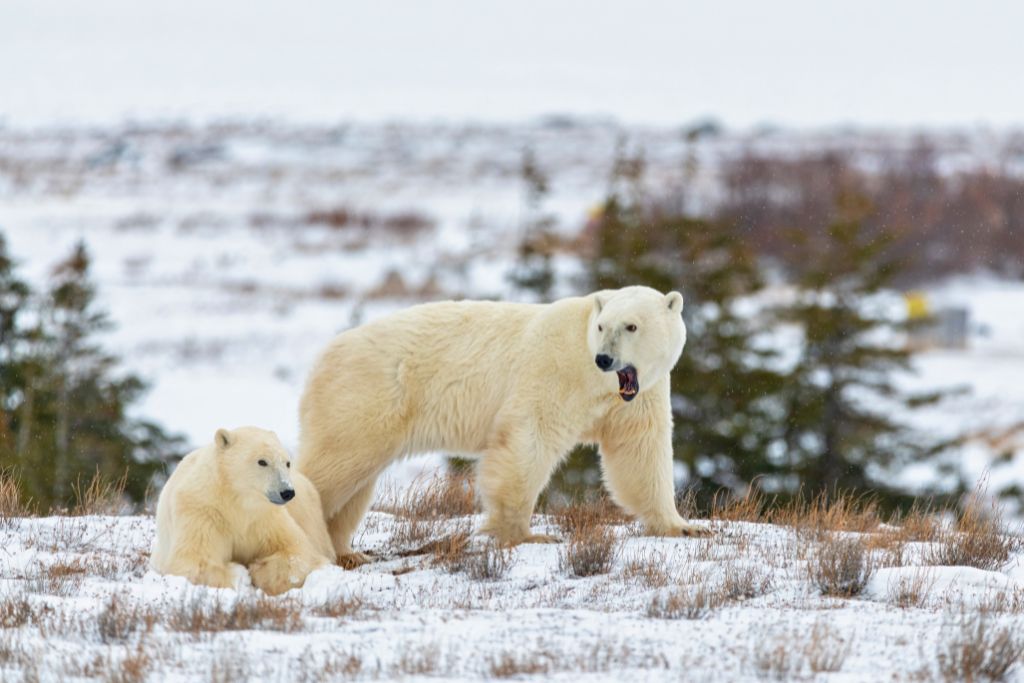
With almost 1000 polar bears, Churchill is the polar bear capital of the world. And sometimes these bears can wander through town. So, residents leave their doors unlocked so you always have somewhere to take refuge should you find yourself being chased by a hungry bear!
Although, fortunately, this doesn’t actually happen very often. So hopefully this doesn’t put you off visiting Manitoba.
And, should you wish to see polar bears up close, you can actually take a polar bear tour from the safety of a specialized vehicle in Churchill. The best time for this is in the summer or fall, when the bears congregate while waiting for the ice to form on Hudson Bay so they can head back north.
13. Milk Comes in Bags in Canada
This isn’t actually the case across the whole country. But, in Ontario, Quebec and the Maritimes it’s normal to buy milk in a bag, rather than in a carton.
Although, you will still also be able to find milk cartons in the supermarket, most people will opt for bagged milk, since it’s much more cost effective. One package of bagged milk contains 3 smaller bags, with a total of 4 litres of milk between them. This costs about the same as a 2 litre carton of milk, but you get twice as much milk!
To pour the milk, you place the bag inside a milk pitcher and cut off the top corner of the bag. Although this might sound messy, it’s actually not that different to pouring milk from a carton.
14. Canada Has Two National Sports
Hockey is usually the one sport that comes to mind when you think of Canada. But, this isn’t the country’s only national sport. While Hockey is Canada’s winter national sport, Lacrosse is Canada’s summer national sport. This is even officially recognized in the National Sports of Canada Act.
15. Canada Has More Lakes Than the Rest of the World Combined
Canada is a country rich in natural resources, and one of those resources is freshwater. In fact, there are more lakes in Canada than in the rest of the world combined!
Although it’s impossible to determine the exact number of lakes in Canada, the number is estimated to be around 2 million. And, here are some fun facts about Canada’s lakes which we do know:
- Around 9% of Canada’s surface area is made up of freshwater
- Almost 20 percent of the world’s total freshwater resources are in Canada
- Canada has 31,752 lakes which are larger than 3 km2 (1.16 sq mi)
- 561 of Canada’s lakes are larger than 100 km2 (38.6 sq mi)
- Half of the world’s 10 largest lakes are in Canada
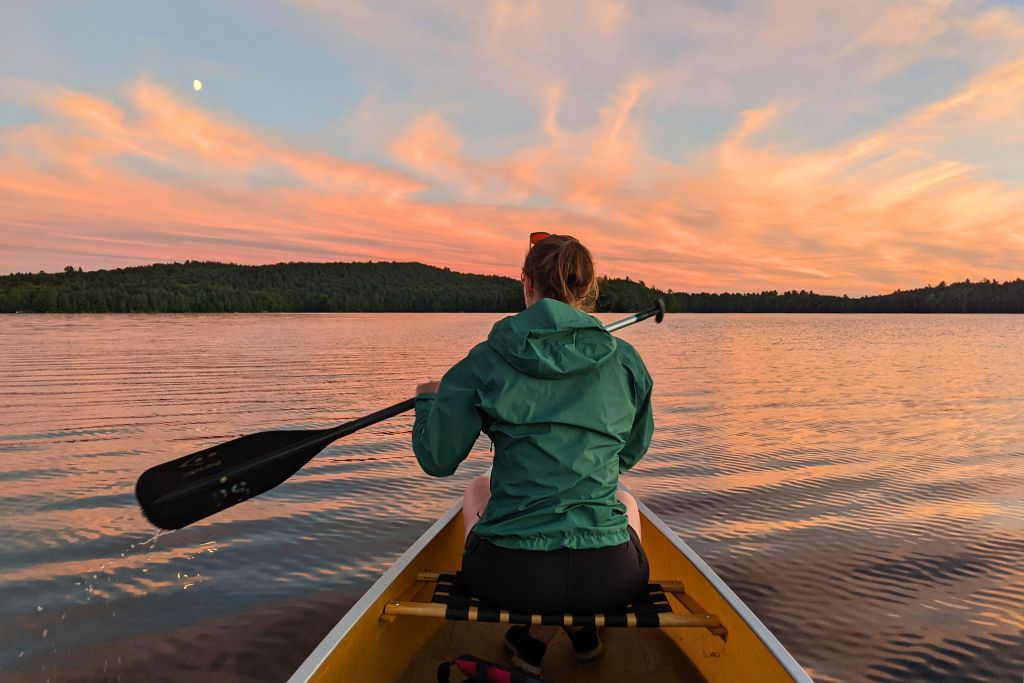
This abundance of lakes makes Canada one of the best places in the world for fishing and water sports like canoeing and kayaking. And, Canada has some beautiful freshwater beaches, including Wasaga Beach in Ontario, which is the longest freshwater beach in the world!
16. A Canadian Bear Inspired Winnie the Pooh
Although created by an English author, the beloved children’s character, Winnie the Pooh, was actually inspired by a real bear from Canada.
In 1914, a Canadian lieutenant named Harry Colebourn purchased a small black bear cub while on his way to fight in World War I. He named the bear “Winnie” after his hometown of Winnipeg, Manitoba.
Winnie became the mascot of Colebourn’s regiment and was eventually left at the London Zoo when Colebourn went to France. The bear became a popular attraction, and it was during visits to the zoo that author A.A. Milne and his son, Christopher Robin, encountered Winnie. This inspired Milne to create the stories of Winnie the Pooh, which have since become cherished classics around the world.
17. Canada Had a 50-Year “Whiskey War” with Denmark
A bloodless war between Canada and Denmark recently came to an end after 50 years. Known as the “Whiskey War”, this was a friendly territorial dispute over Hans Island, a small, uninhabited rock located between Greenland and Canada’s Ellesmere Island.
Sine the 1970s, Danish and Canadian military personnel would visit the island to plant their flag, remove the other’s flag, and leave a bottle of liquor in its place – schnapps from Denmark and whiskey from Canada, hence where the dispute got its name.
This lighthearted dispute however officially came to an end in 2022, when both countries signed a treaty dividing the island and establishing a land border. And, symbolically, they exchanged bottles of liquor one final time.
18. Canada Has the World’s Highest Tides
The Bay of Fundy, located between the Canadian provinces of New Brunswick and Nova Scotia, is home to the highest tides in the world, reaching up to 16 meters (52 feet). These extraordinary tides are due to the bay’s V-shape, which causes the incoming tidal waters to be squeezed and pushed higher as it enters the bay’s narrower northern end.
The tides go in and out twice a day, with a billion tonnes of water filling and emptying from the bay each time. This is more water than the flow of all the freshwater rivers in the world, making this a particularly impressive sight to see!

19. Most of the World’s Maple Syrup is Produced in Canada
There’s a reason why Canada is so famous for maple syrup. A whopping 71% of the world’s maple syrup is produced in Canada. And 91% of that comes from the province of Quebec.
This explains why Canadians consume so much maple syrup. They even eat it frozen on a stick (known as maple taffy). And you’ll find maple flavoured sweet and savoury goods in abundance throughout the country.
20. One of Canada’s Biggest Crimes was the Great Maple Syrup Heist
On the topic of maple syrup, not only is it a delicious sweet treat, but it’s also one of the most highly valued commodities in Canada. So much so, that maple syrup was actually the target of one of the largest heists in Canadian history!
Over several months from 2011 to 2012, thieves stole 3,000 tons of maple syrup worth more than $18 million from a storage facility in Quebec. This theft, known as the Great Maple Syrup Heist, involved thieves siphoning syrup from barrels in the province’s reserve and replacing it with water. The syrup was then sold on the black market to buyers in Ontario and the US, who didn’t know that the syrup was stolen.
Several individuals were eventually convicted for their roles in the heist, with the ringleader being sentenced to nearly 8 years in prison and a $9.4 million fine.
21. Canada is as Tall as it is Wide
One unique feature of Canada’s geography is that the country is as tall as it is wide. This means that the country has an exceptionally wide range of climate conditions.
And, different regions across the country will usually experience different seasons at the same time. So, while residents in the south could be experiencing warm, summer-like weather, it could still be snowing and cold up north near the Arctic!

22. Canada Has the Most Moose in the World
Canada is home to a wide array of impressive and fascinating animals. One of which is the mighty moose, standing up to 2.1 meters (7 feet) tall and weighing between 200 to 700 kilos (440 to 1543 pounds).
And your chances of seeing one of these huge creatures are highest in Canada, since the country boasts the largest population of moose in the world. There are estimated to be between 500,000 and 1 million moose in Canada, which can be found in every single province and territory.
23. You Will Weigh Less in and Around Hudson Bay
Interestingly, the area in and around Canada’s Hudson Bay has less gravity than the rest of the world. The gravitational anomaly in Hudson Bay is only 0.005%, so you won’t be able to feel it. But, technically you will weigh slightly less here than elsewhere in the world. Although the difference is only about four-thousandths of a percent less.
This anomaly is believed to be caused by a vast glacier called the Laurentide Ice Sheet. This massive ice sheet used to cover the region and pushed down the Earth’s crust, compressing and shifting rock in its way, causing less mass and thereby less gravity in the area.
24. Santa Claus is a Canadian Citizen
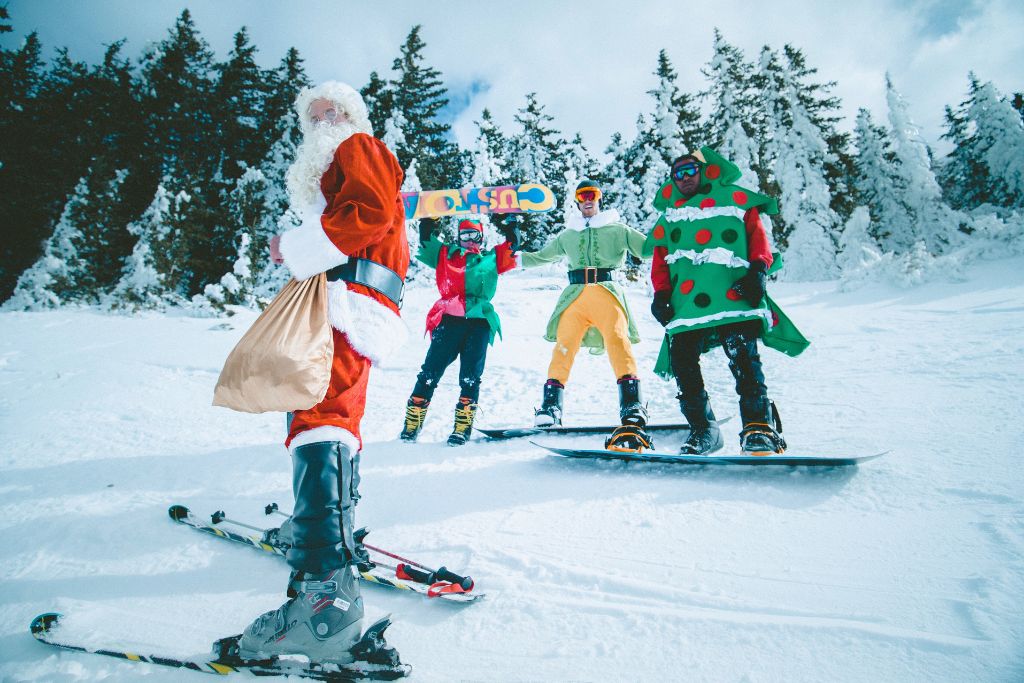
We all know Santa Claus lives in the North Pole. But did you know that Santa is a Canadian citizen?
Canada claims the North Pole as part of its territory. So, in 2008, the Canadian government officially declared Santa Claus a Canadian citizen. Santa even has his own Canadian postal address: North Pole, H0H 0H0, Canada, where children can send their letters and receive replies from Santa himself.
This is definitely one of the best fun facts about Canada!
25. Several Famous Inventions Come from Canada
Hawaiian Pizza isn’t the only invention to come out of Canada. In fact, Canada has given the world several important inventions, including the Nobel Prize winning medicine, insulin.
Some of Canada’s other famous inventions are basketball, the pacemaker, peanut butter, IMAX, wireless radio transmission, the snowmobile, Java programming language, the paint roller, garbage bags, and road lines.
26. Some of Canada’s National Parks are Bigger Than Countries
Canada is a huge country with endless pristine landscapes. As such, it has some pretty massive national parks. In fact, Canada’s national parks are so vast that some of them are larger than entire countries!
For example, Wood Buffalo National Park, which spans Alberta and the Northwest Territories, covers an impressive 44,741 km2 (17,275 sq mi), making it larger than Switzerland. Similarly, Nahanni National Park Reserve in the Northwest Territories covers 30,050 km2 (11,600 sq mi), which is bigger than countries like Albania and Belgium.
27. The World’s Oldest Rocks are in Canada
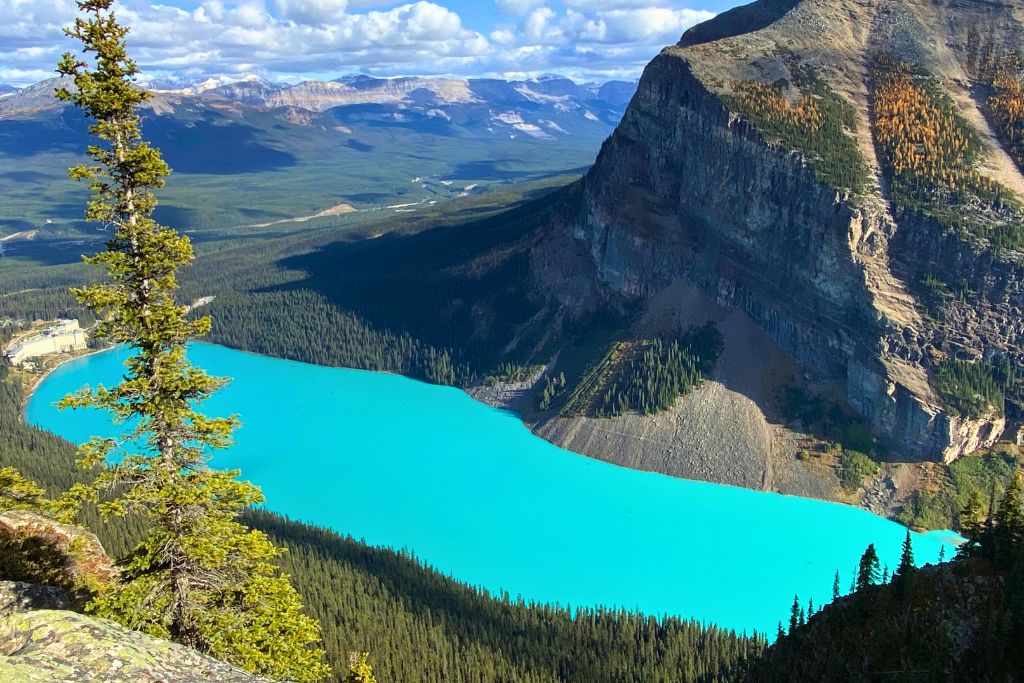
One of the most fun facts about Canada for the geology enthusiasts out there is that Canada is home to the world’s oldest known rocks. Specifically, on the Eastern Shore of Hudson Bay in Northern Quebec, part of the Nuvvuagittuq Greenstone Belt rockbed has been dated to around 4.28 billion years ago!
And, a 2017 report also provided evidence of the oldest trace of life on earth, due to fossils of microorganisms found in these rocks.
In addition, Canada also has the Acasta Gneiss in the Northwest Territories, which dates back around 4.031 billion years and was the oldest known rock formation in the world, until the discovery of the Nuvvuagittuq Greenstone Belt in 2001. However, there has been some contention surrounding the methods used to date the rocks. So, many scientists still argue that the Acasta Gneiss is actually the older of the two.
28. The World’s Oldest Pool of Water is in Ontario
As well as having the world’s oldest rocks, Canada is also home to the world’s oldest water source.
In 2016, scientists discovered the world’s oldest known pool of water in the Kidd Mine, near Timmins, Ontario. This ancient water, found nearly two miles below the Earth’s surface, is believed to have been there for 2 billion years!
The discovery was made possible through the analysis of dissolved gases, such as helium and neon, which helped determine the age of the water. This remarkable find not only provides insight into the Earth’s early history but also suggests the potential for ancient life forms existing in such extreme environments.
29. Canadian Bank Notes Smell Like Maple Syrup
Does Canadian money smell like maple syrup? This is up for debate, as it has never been officially confirmed.
Many Canadians are convinced that the new polymer bank notes have a distinctive maple syrup scent. This rumour began circulating shortly after the notes were released in 2011. The Bank of Canada, however, has denied adding any scent to the currency, suggesting that the smell might be a byproduct of the manufacturing process.
However, from personal experience, I fully believe it is more than just a rumour, or at the very least a very fun coincidence, as I have noticed it myself. On a few of occasions, I’ve been issued brand new bank notes, and each time they had a strong maple syrup smell!
Whether or not this was the Bank of Canada’s intention, the sweet scented money is one of my favourite fun facts about Canada!

30. Canada Was First Colonized by Vikings
You’re probably aware that Canada was colonized by the French and British. But, did you know that the first settlers in Canada were actually Vikings?
Long before the arrival of European explorers like John Cabot and Jacques Cartier, the Vikings made their mark on Canadian soil. Around the year 1000 AD, Norse explorers from Greenland, led by Leif Erikson, established a settlement at L’Anse aux Meadows, located on the northern tip of Newfoundland. This site is now recognized as the earliest evidence of European presence in North America and is a UNESCO World Heritage Site.
The settlement at L’Anse aux Meadows served as a base for further explorations, but it was only occupied for a short period, likely due to conflicts with Indigenous peoples and harsh environmental conditions.
31. Temperatures in Canada Rival Those on Mars
One of the least surprising facts about Canada is that it gets very cold in winter. But, you may not realize just how cold.
In February 1947, in the village of Snag in the Yukon, Canada’s lowest recorded temperature was -63.0°C (-81.4°F), which is as cold as the average temperature on the surface of Mars!
And, although it hasn’t been that cold in Canada since, technically the country frequently experiences temperatures similar to those on Mars, as the red planet has a huge climate range with highs of 20°C (68°F) to lows around -153°C (-243°F).

32. Canada Claims to Have the Longest Street in the World
Another feature that Canada claims the title for is having the longest street in the world. Although this might have once been true, the claim is technically a misconception.
Ontario’s Yonge Street has been historically referred to as the longest street in the world and was even once listed in the Guinness Book of World Records. Starting at Lake Ontario in Toronto, Yonge Street was previously considered to be part of Highway 11, extending its length to approximately 1,896 kilometres (1,178 miles) all the way to Rainy River at the Minnesota border.
These days, Yonge Street ends in Barrie, making it only 86 kilometres (53 miles) long (which is still pretty long). But, regardless of whether it holds the title, it’s still Toronto’s most famous street and a hub for shopping, entertainment, and major events.
33. Some of the World’s Biggest Celebrities are Canadian
Canada is a country of talent, with a surprisingly high number of A-list celebrities. You might not even realize how many household Hollywood names are actually Canadian!
Rachel McAdams, Ryan Gosling, Jim Carrey, Ryan Reynolds, Seth Rogan, Keanu Reeves, Mike Myers, Kim Cattrall, Sandra Oh, Michael J. Fox, Eugene Levy, Hayden Christensen, Michael Cera, Catherine O’Hara, and many more actors and comedians are Canadian.
As for singers and musicians, Justin Bieber, Drake, The Weekend, Celine Dion, Shawn Mendes, Bryan Adams, Neil Young, Avril Lavigne, Michael Bublé, Nelly Furtado, Alanis Morissette, and Shania Twain are just some of Canada’s most famous artists.
34. Canada is Home to 10% of the World’s Forests
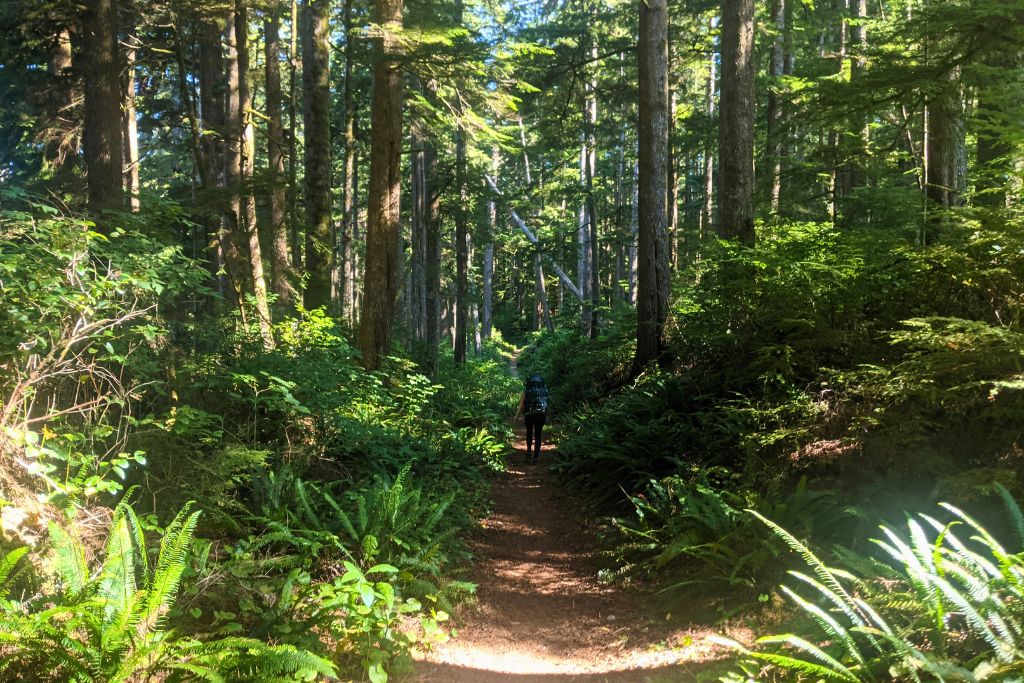
About 40% of Canada’s land area is covered by forest, making it the third most forested country in the world, after Russia and Brazil. And, with 347 million hectares of forest, this makes Canada home to almost 10% of the world’s total forests!
These vast forests are crucial for biodiversity, climate regulation, and supporting the livelihoods of many communities, including numerous Indigenous groups.
Canada’s forests span a variety of ecosystems, from the boreal forests that cover much of the northern part of the country to the temperate rainforests of British Columbia.
35. Canada is One of the Most Educated Countries in the World
Until recently, Canada was the most educated country in the world, only being surpassed by South Korea in 2024.
Still, the level of education amongst Canadians is impressive. The country has a tertiary education attainment rate of 66%, thanks to its high-quality and accessible higher education system, as well as immigration pathways for students and graduates.
Canada also boasts an almost perfect literacy rate of 99%. And, 89% of Canadian adults between the ages of 25 and 64 have obtained at least a high-school level education. These high numbers are supported by Canada’s extensive educational infrastructure and focus on lifelong learning
Wrap Up – Fun Facts About Canada
So, there you have it, 35 fun facts about Canada!
Hopefully you’ve found this post interesting and have learned some new things about Canada’s fascinating history, geography and unique quirks.
Finally, if you’re looking to find out more, check out some of my other Canada content for travel guides and inspiration, information about immigrating, and even more fun facts about Canada.
READ MORE
What are The Capital Cities in Canada?
50 Pros and Cons of Living in Canada
When is The Best Time to Visit Canada?
